Unlocking Finances for City-Scale Transformation through Multilevel Governance
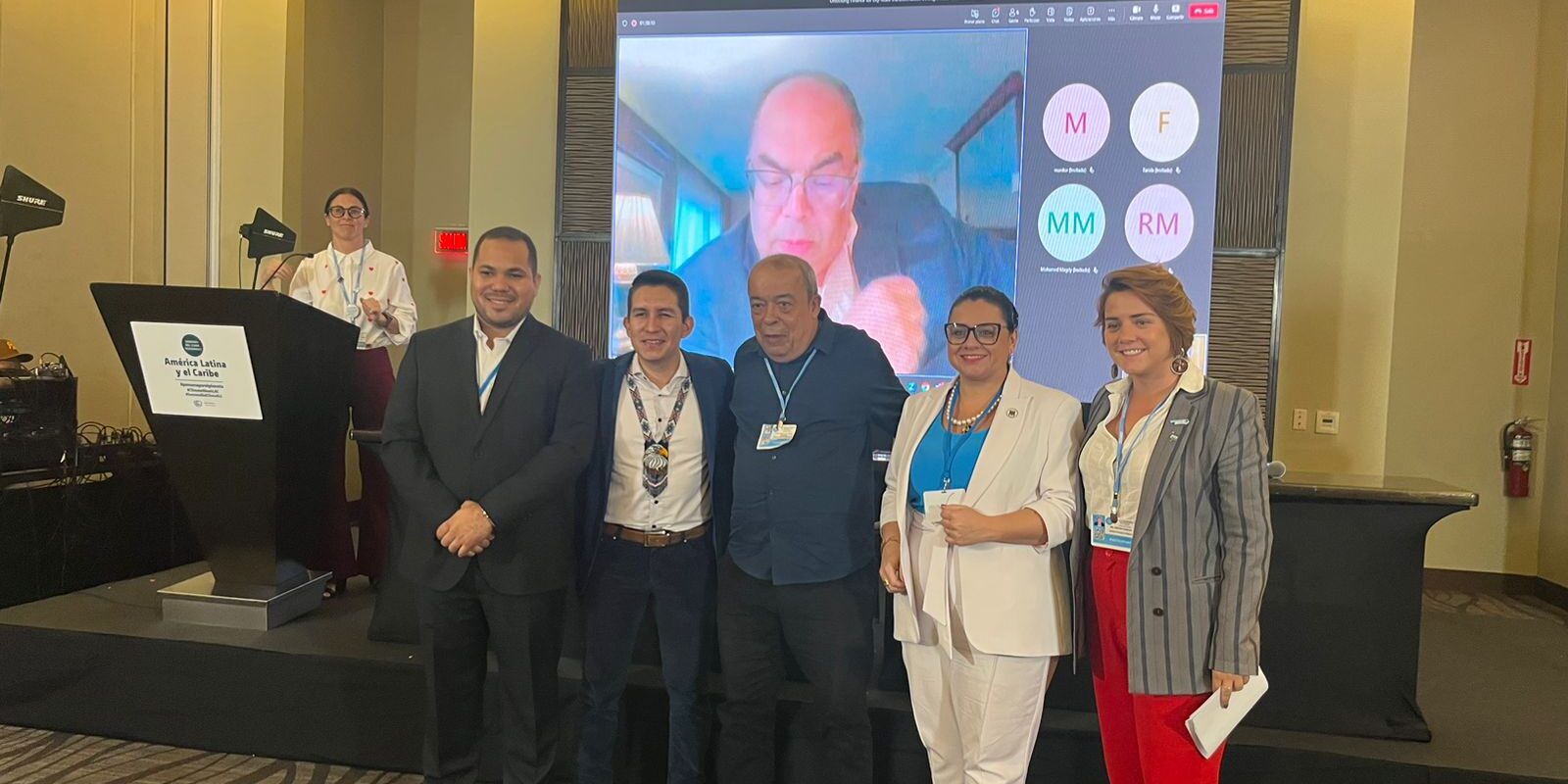
In the context of LACCW 2023, the Global Covenant of Mayors for the Americas, always committed to the crucial challenges of climate financing in Latin America and the Caribbean, participated on October 26th in the panel discussion “Unlocking Finances for City-Scale Transformation through Multilevel Governance” in Panama City.
Hélinah Cardoso, Coordinator of the Global Covenant of Mayors for the Americas, was present as the project’s representative on the panel, examining crucial strategies to address the challenges of climate financing in the Latin America and the Caribbean (LAC) region.
The panel featured the participation of Luiz Arnaldo Campos, Coordinator of International Relations for the City of Belém, Brazil; José Luis Fabrega, Mayor of Panama City, Panama; Marjorie Kauffmann, Secretary of Environment and Infrastructure of Rio Grande do Sul, Brazil; and Mr. André Mauricio Granda Garrido, Mayor of the Province of Pastaza, official representative of CONGOPE, Ecuador.
Multilevel Governance
The main points addressed by Helinah, along with the pact’s ideas in the panel “Unlocking Finances for City-Scale Transformation through Multilevel Governance,” are as follows:
1. The Paris Agreement in question: Despite the 2015 Paris Agreement being a significant milestone in the fight against climate change, recent reports indicate that the world is far from achieving the ambitious climate goals set.
2. Local Actions with Global Impact: Many cities are taking bold measures to reduce carbon emissions, often surpassing their own national governments. Subnational governments play a vital role in climate change mitigation and adaptation.
3. The Importance of Multilevel Governance: Collaboration and coordination between local, regional, and national governments are crucial for the effectiveness of climate actions. This involves data exchange, capacity development, and obtaining financing.
4. Challenges in Latin America and the Caribbean: The region faces specific challenges, such as the need for financing, coordination with national governments, and obstacles to accessing credit and investment resources.
5. Crucial Support for Cities: Cities need support, technical assistance, and financing to achieve their climate goals. This collaboration involves national governments, businesses, civil society, and the citizens themselves.
6. Cities at the Forefront: Several cities worldwide stand out in implementing successful climate actions, thanks to collaboration with various stakeholders, including national governments and the private sector.
7. Role of State Governments: State governments play a crucial role as intermediaries in facilitating climate actions in cities.
8. Needs of Local Authorities: To promote effective mitigation and adaptation solutions, local governments must develop technical and managerial capabilities and receive support from public and private institutions.
The fight against climate change requires effective multilevel governance, where cities and local governments play a critical role. Collaboration and resource exchange between governments, the private sector – such as the Covenant – and civil society are vital to achieving a low-emission, resilient, and secure future. The challenge of addressing climate change is increasingly becoming a local reality, and actions at the local level have the potential for significant global impact.