Global Covenant of Mayors and European Union Collaborate in the Winter School of the Chilean Association of Municipalities
Brasilia, August 25 – The Global Covenant of Mayors and the European Union have participated in yet another event that demonstrated the importance of multilevel collaboration between global organizations and local governments to address the challenges of climate change and promote sustainable development at the community level.

The Winter School on Environment organized by the Chilean Association of Municipalities, held from August 22 to 25, provided a crucial space for discussing issues related to climate change and local development.
“Creating instances that allow strengthening climate action at the local level is urgent, and we see a great need on the part of local governments to train and share with their peers about strategies to mitigate and adapt to climate change,” highlighted Pía Hevia, the Cooperation Officer of the European Union, who accompanied the activities.
She emphasized that, during the Winter School, participants were able to undergo training in specific methodologies, learn from the experiences of other municipalities, and also engage in in-depth discussions on relevant areas such as territorial planning, nature-based solutions, critical infrastructure, or sustainable mobility. “It is important to mention that, in the Latin American context, the Chilean context is very relevant due to its robust climate governance, which includes the Climate Change Framework Law, establishing obligations at the regional and municipal levels regarding planning in this area. This puts Chilean municipalities at the forefront of climate planning in the Latin American region,” she concluded.
Throughout the four days of the event, the Winter School addressed a variety of relevant topics for municipal communities. With the participation of state authorities such as the Minister of the Environment, María Heloisa Rojas Corradi; the Secretary of the Environment for the Los Ríos Region, Alberto Tacón, and the Mayor of Valdivia, Carla Andrea Amtmann Fecci, the event provided an environment for the exchange of knowledge among experts, municipal managers, and local authorities. The main objective was to strengthen community participation in the search for sustainable solutions.
Workshop Empowers Cities to Develop Climate Action Plans
The purpose of this training was to provide tools and knowledge to member cities of the Pact to initiate the development of their Climate Action Plans (CAPs), with a special focus on the Access to Energy and Energy Poverty Pillar.
The training took place through a practical approach, actively involving cities and their local representatives. During the event, the fundamental concepts of the Global Covenant of Mayors were explored, including the steps and processes leading to the development of the CAP and its respective report.
Furthermore, the training complemented national programs related to climate and energy issues. The “Huella Chile” Program from the Ministry of the Environment and the “Comuna Energética” initiative promoted by the Ministry of Energy of Chile both participated in the school program and framed the training.
In addition, municipalities committed to the Pact and ambitious climate action have held bilateral meetings with JRC to delve into topics discussed throughout the school.
It is expected that participants in the workshop can bring the acquired knowledge back to their cities and promote concrete progress in the local climate agenda. In this way, the aim is to contribute to a more sustainable and resilient future in the face of climate challenges.

Valdivia and its Climate Action Plan
One of the highlights was the milestone launch of Valdivia’s Climate Action Plan, supported by the National Strategy of the Global Covenant of Mayors in Chile.
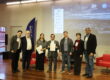
The event featured the participation of Mayor Carla Andrea Amtmann Fecci, Minister of the Environment María Heloisa Rojas Corradi, Cooperation Officer of the Delegation of the European Union in Chile Pia Hevia, Presidential Delegate Carla Peña, Regional Ministerial Secretary of the Environment of the Los Ríos Region Alberto Tacón, and JRC representative Camilo Franco.
Valdivia’s plan showcases how conservation and sustainability can converge in a climate action plan with real impact.
The National Strategy of the Covenant in Chile is implemented by AChM, promoting, among other objectives, strategic planning and the implementation of Local Climate Action Plans.
According to the AChM representative alongside the Covenant, Rodrigo Arias, Valdivia’s plan is one of the 6 being developed under the National Strategy (NS) of the Covenant for Chile.
“The document is a work in progress, already fulfilling more than 95% of the commitments. One of its strengths is that it has been built with the contribution of various municipal teams and citizen participation, in addition to institutions that are part of the National Advisory Committee of the GCoM. Now the municipality needs to present it in a Municipal Council session and get it approved by that collegiate body,” Arias explained.
Arias also emphasized that the launch comes at a very opportune moment, as the 6 Chilean municipalities that are members of the Covenant will be among the first to have this planning tool, one year after the promulgation of the Climate Change Framework Law, which, in Article 12, obliges municipalities to develop these plans.
The collaboration between the Global Covenant of Mayors and the European Union at the Winter School of the Chilean Association of Municipalities underscores the importance of addressing climate challenges through international partnerships and local efforts. Through the exchange of knowledge and experiences, municipal leaders are preparing to face climate challenges effectively and sustainably.

Global Covenant of Mayors for Climate and Energy
The Global Covenant of Mayors for Climate and Energy is the world’s largest alliance of cities and municipalities leading the fight against climate change, with the support of municipal networks and other key actors in subnational climate action. It involves over 12,700 committed cities in more than 140 countries worldwide, representing over 11% of the global population.
In Latin America, the Covenant is funded by the European Union Partnership Instrument and engages more than 650 cities in 17 countries in the region.