Cáceres (Brazil) brought its experience with climate tools to the Innovate4Cities Conference
The municipal secretary of Planning took part in the international agenda in Nairobi, highlighting the use of data, artificial intelligence and digital solutions to support local climate action.
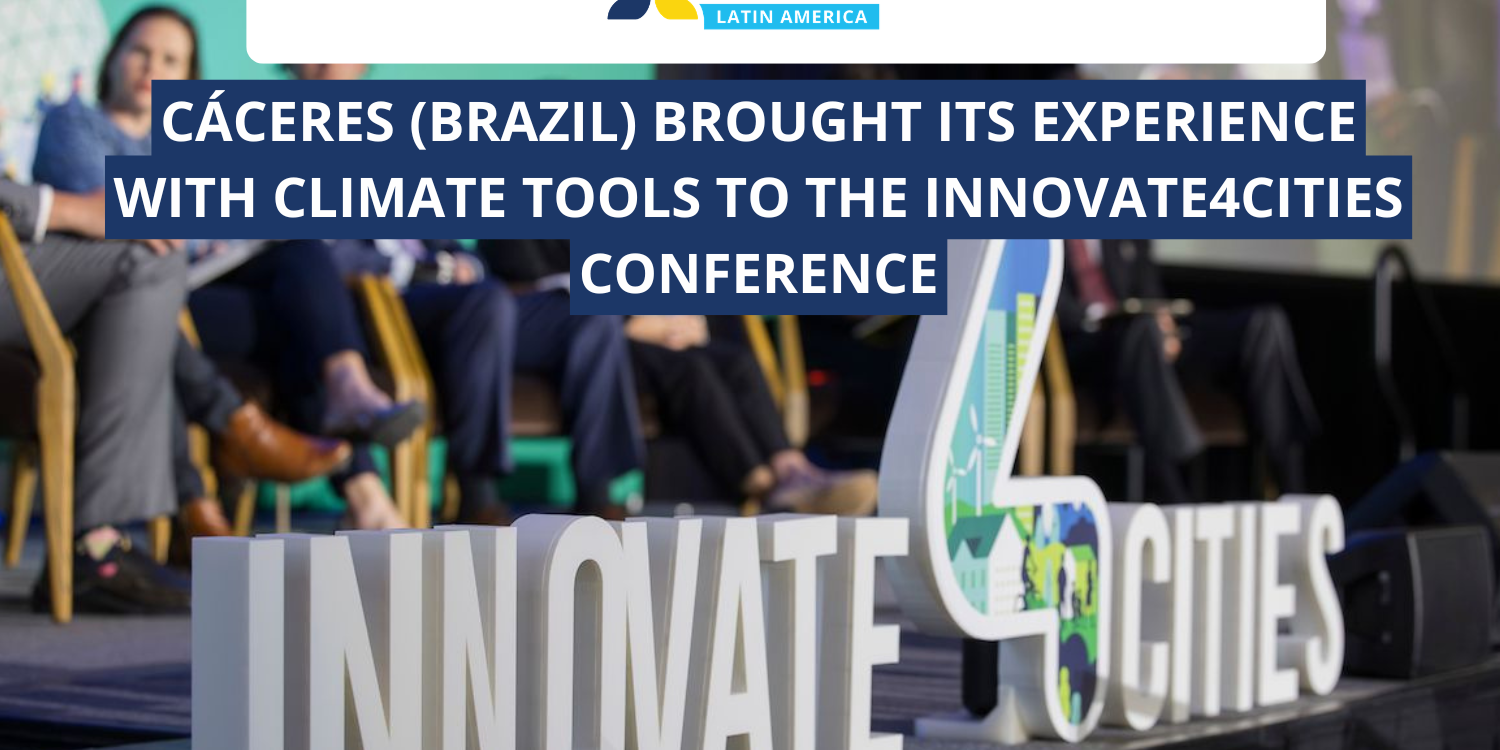
Cáceres, in the Brazilian state of Mato Grosso, was represented at the Innovate4Cities 2026 Conference, held at the UN-Habitat complex in Nairobi, Kenya. The agenda brought together urban leaders, experts, city networks and international organizations to discuss how science, innovation, data and technology can accelerate climate action in territories.
The municipality’s participation was led by Leandro Martins Barbosa, municipal secretary of Planning of Cáceres, who brought to the conference the city’s experience in using digital tools to identify climate risks, map emissions and guide high-impact actions. The agenda also included the presence of Rebecca Borges, representing GCoM Latam, reinforcing the Pact’s regional role in supporting Latin American cities in innovation, climate planning and the implementation of local public policies.
Cáceres’ presence at Innovate4Cities marked another step in a trajectory that began with the municipality’s entry into the international climate agenda. Following Mayor Eliene Liberato’s participation in a UN Climate Conference, the city began strengthening its work on sustainability and climate change, joining the Global Covenant of Mayors for Climate and Energy and advancing the development of its first Greenhouse Gas Inventory.
This process opened the door for Cáceres to participate in new national and international initiatives, including projects supported by the Federal Government, the Ministry of Environment, C40 and partner organizations. The municipality currently takes part in the Green Resilient Cities Program, an initiative that has supported Brazilian cities in structuring high-impact climate actions.
“Cáceres entered this agenda through a political decision to look toward the future of the city. Joining the Global Covenant of Mayors and developing our first greenhouse gas inventory opened doors to new projects, partnerships and tools that today help the municipality better plan its adaptation and mitigation actions,” said Leandro Martins Barbosa.
Cáceres and the Climate Compass
One of the main highlights of Cáceres’ participation was its experience with the Climate Compass, a tool developed under the Green Resilient Cities Program to support Brazilian municipalities in understanding their climate profiles and prioritizing concrete actions.
The platform brings together information on climate risks, greenhouse gas emissions and high-impact climate actions, offering cities a clearer basis to plan, implement and monitor their mitigation and adaptation agendas.
Cáceres took part in the tool’s development process, contributing the perspective of a city seeking to incorporate climate intelligence into urban and territorial planning. During the conference, the municipality shared its experience in the session dedicated to the use of data for climate-responsive urban planning, alongside partners involved in the development of the Climate Compass.
The experience showed how municipalities can move beyond reacting to climate impacts and begin using data to anticipate risks, guide decisions and structure more effective actions.
Artificial intelligence to address extreme heat
Another focus of the agenda was participation in discussions on a new tool aimed at addressing extreme heat in cities. The initiative, developed in partnership with C40 and IBM, uses artificial intelligence and territorial data to identify the most critical areas of urban heat exposure and support the design of solutions adapted to each local context.
The proposal speaks directly to one of today’s main urban challenges: rising temperatures in cities and their impacts on health, mobility, infrastructure, public spaces and quality of life.
By combining climate data, artificial intelligence and urban planning, the tool makes it possible to visualize where heat impacts are most intense and which interventions can help reduce vulnerabilities. Possibilities presented included nature-based solutions, expansion of green areas, urban shading, requalification of public spaces and other adaptation measures.
Cáceres’ presence in this debate reinforced the municipality’s position as part of a climate innovation agenda that seeks to transform technology into practical solutions for local public management.
AI, innovation and urban reality
The agenda also included Leandro Martins’ participation in a panel dedicated to the practical application of artificial intelligence in cities and climate action. The session discussed how AI tools can support local governments, while also addressing the real challenges cities face in turning innovation into useful solutions for public management.
Topics included the data infrastructure available in municipalities, the concrete needs of local managers and the gap that still exists between what innovators develop and what cities are able to implement on the ground.
In the discussion, Cáceres contributed a municipal perspective on how technology needs to respond to the real dynamics of local public administration, considering technical capacities, institutional limitations, climate priorities and the needs of the population.
From diagnosis to implementation
Cáceres’ experience reinforced a central message for the Pact’s agenda in Latin America: local climate action depends on technical capacity, accessible data and tools that help municipalities turn information into action.
By taking part in discussions on the Climate Compass, artificial intelligence and new solutions to address extreme heat, Cáceres showed how cities can contribute not only as users of tools, but also as partners in their development.
The agenda at Innovate4Cities increased the visibility of this experience and strengthened the role of Brazilian local governments in building innovative, inclusive climate solutions connected to the real needs of territories.