GCoM convenes national coordinators to present a new phase for the alliance in Latin America
The regional meeting established the priorities for 2026, emphasizing climate action implementation, urban project finance, progress reporting and stronger cooperation.
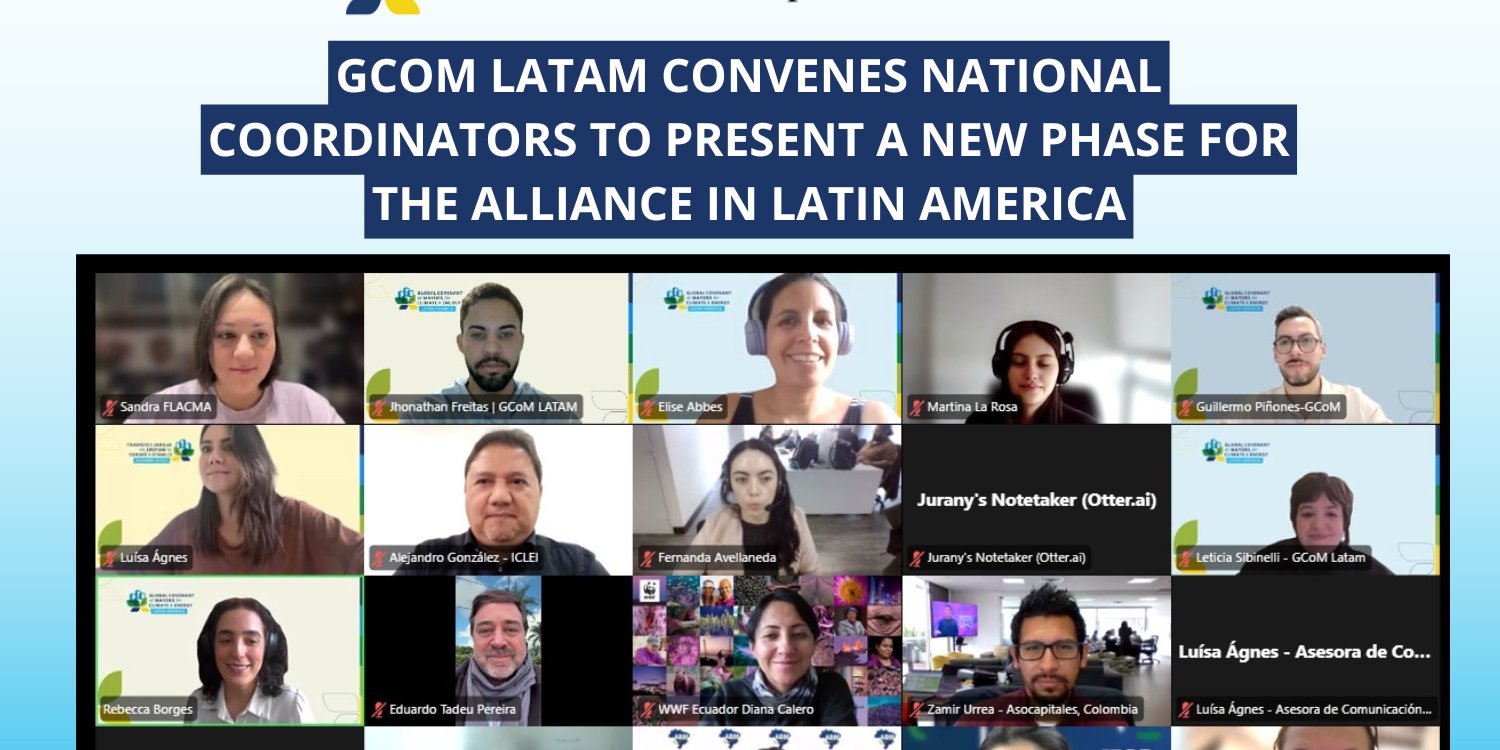
The Global Covenant of Mayors for Climate and Energy (GCoM) convened its national coordinators and partner organizations on June 16 to present the alliance’s new phase in Latin America and align its main areas of work for 2026.
After a decade dedicated to mobilizing cities and strengthening climate planning, GCoM is moving toward a model more firmly focused on implementation. The priority is to help municipalities turn their commitments into projects, public policies and tangible results for residents.
“Our objective is to deepen support for climate action implementation, without limiting our work to planning or the mobilization of new cities,” explained Rebecca Borges of the GCoM Regional Secretariat.
During the meeting, the Secretariat presented its strengthened structure, with specialized capacities in data, institutional assistance, communications and climate finance. The meeting also reaffirmed the role of national coordinators as the link between the regional strategy and the needs of cities in each country.
From plans to projects
Access to finance remains one of the main challenges facing local governments. As part of its response, GCoM is developing a pilot initiative with the 16 municipalities represented in the Mayors Forum in Latin America.
Cities are receiving technical assistance to prepare projects in three priority sectors: adaptation, sustainable mobility and waste management. The process includes identifying challenges, developing solutions, preparing concept notes and designing financing strategies.
The goal is to consolidate a regional portfolio of priority projects that are better positioned for presentation to climate funds, financial institutions and other potential partners.
“The idea is to create a collaborative repository of funds and urban climate projects that can guide municipalities according to their capacities and the type of initiative they are prioritizing,” said Guillermo Piñones, GCoM climate finance specialist.
Data to demonstrate progress
Climate reporting is another central component of this new phase. The Regional Secretariat will continue supporting cities in the use of the CDP-ICLEI platform and the application of GCoM’s Common Reporting Framework.
Climate data make it possible to track progress, identify support needs and demonstrate the benefits of climate action. They are also essential for structuring projects, mobilizing resources and communicating the cost of inaction in the face of extreme events.
The regional agenda includes training on reporting, energy, mitigation and adaptation, designed around the needs identified by municipalities and national organizations.
Regional leadership and coordination
The meeting also highlighted the strengthening of the Mayors Forum as GCoM’s political body in Latin America. Claudio Castro, mayor of Renca, Chile, has assumed the presidency of the Forum, which brings together 16 local governments from eight countries.
Fernanda Alonso, mayor of General Pico, Argentina, recently joined the group. During the second half of the year, the alliance will seek to increase the presence of Latin American cities in international forums such as London Climate Action Week, Medellín Climate Week and the conferences on biodiversity, climate change and desertification.
For ICLEI representative Rodrigo Corradi, GCoM’s ability to deliver depends on coordination among the organizations that make up the alliance.
“GCoM is a coalition that represents all of us. We need to combine our capacities to move closer to implementation and to our mayors,” he said.
Communicating results
Coordinated communications will be another priority for the new cycle. From October 24 to 31, GCoM Latin America plans to hold a regional campaign linked to the International Day against Climate Change and World Cities Day.
The initiative will highlight tangible results such as emissions reductions, water savings, renewable energy generation and increased urban resilience. It will also emphasize community participation and the benefits of climate action in people’s daily lives.
As this new phase begins, GCoM is reaffirming a shared priority for Latin America: bringing technical assistance, data, finance and cooperation closer to municipalities to turn climate ambition into visible results across their territories.