CDP-ICLEI Track reporting mentorship webinar guides cities on climate data disclosure
Held on September 11th, the event brought together ICLEI South America, CDP and GCoM Latin America to support local and regional governments in the 2026 climate reporting cycle
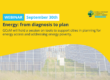
The Global Covenant of Mayors for Climate and Energy in Latin America (GCoM), in partnership with ICLEI South America and CDP, participated in the webinar “CDP-ICLEI Track Reporting Mentorship,” held on September 11, 2026.
The session aimed to explain the importance of environmental data disclosure, introduce the reporting process on the CDP-ICLEI Track platform, share good practices and provide an opportunity to address questions from local and regional governments.
With simultaneous interpretation in Portuguese and Spanish, the event was intended for ICLEI South America members, GCoM members and other municipalities interested in better understanding how to report their climate and environmental data in the 2026 cycle.
GCoM, ICLEI and CDP support subnational governments
The webinar opened with contributions from Felipe Jukemura, Technical Coordinator for South America at ICLEI; Guilherme Ponce, Engagement Lead for the Americas at CDP; and Rebecca Borges, GCoM Advisor for Latin America.
During the session, Bianca Cantoni, Institutional Relations and Advocacy Coordinator for South America at ICLEI, discussed the benefits of environmental data disclosure and the importance of reporting as a tool for local climate governance.
The event also showcased good reporting practices, with contributions from Carolina Theler, Director General of Policy and General Strategy for Buenos Aires, and José Miguel Carneiro Pacheco, Director of Resilience at Salvador’s Municipal Secretariat for Sustainability, Resilience, Well-being and Animal Protection.
The session also featured a presentation by Renata Bueno, from CDP’s Americas Engagement team, on how to report through the CDP-ICLEI Track platform, followed by a question-and-answer session.
Data to guide local climate action
The impacts of climate change make it increasingly urgent for local governments to move from identifying risks to implementing concrete adaptation responses. In this process, data on risks, vulnerabilities, targets and plans are essential to guide priorities, strengthen planning and support actions that protect people, infrastructure and essential services.
Recent experience from cities reporting to CDP shows that they are at different stages of this journey. In 2025, an analysis of 80 Latin American cities identified gaps in adaptation assessments, target setting and, particularly, the development of adaptation plans.
The 2026 reporting cycle reinforces this agenda, with greater attention to issues such as progress towards targets, vulnerable groups and planning.
Reporting to advance along the GCoM journey
For GCoM signatory cities, reporting enables progress to be tracked across mitigation, adaptation and energy. Starting with the 2026 reporting cycle, inclusion of the energy pillar is mandatory. It must be addressed alongside the other two pillars to meet the Covenant’s reporting requirements.
The process enables local governments to organize information, identify gaps, understand their specific needs and use reported data as a basis for developing more targeted action plans.
Through CDP-ICLEI Track, municipalities can also connect their data to global initiatives, improve the quality of their reporting and strengthen their climate planning capacity, particularly on issues related to risks, vulnerabilities, the most exposed groups and adaptation.
Through this mentorship session, GCoM Latin America, ICLEI South America and CDP emphasize the importance of supporting subnational governments in using climate data as a tool for decision-making, recognizing progress and implementing concrete local action.