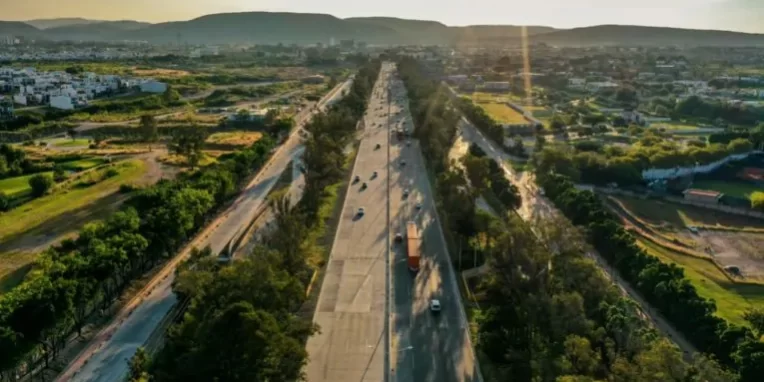
The Climate Action Plan of the Metropolitan Area of Guadalajara, Mexico (PACmetro), launched in late 2020, has been awarded the United Nations Global Climate Action Award in the “Climate Leaders” category at the United Nations Climate Change Conference (COP26). The plan is the first of its kind at a metropolitan scale in Mexico and is part of the C40 Network.

The Metropolitan Area of Guadalajara (AMG), comprised of the cities of Guadalajara, El Salto, Tlajomulco de Zúñiga, Tlaquepaque, Tonalá, and Zapopan, is an international pioneer in promoting a plan with a metropolitan perspective, recognizing the strength of the metropolis. The PACmetro is a strategic planning tool aligned with the goals of the Paris Agreement and the Nationally Determined Contributions (NDCs), integrating adaptation and mitigation components in a socially inclusive and equitable manner.
The three main objectives of the plan are: a carbon-neutral metropolis based on integrated waste management, mass and non-motorized mobility, efficient energy use, and the supply of renewable energy; an inclusive metropolis that is sustainable and resilient to climate impacts; and a coordinated, participatory, and inclusive metropolis with climate leadership.
Since its publication in December 2020, it has strengthened in terms of the number of actions and projects contributing to the strategy. To date, the instrument includes 3 objectives, 8 strategies, 29 global goals, and 136 planned and/or in the process of implementing actions. The expansion of the public bicycle system, for example, currently has 237 km of bike lanes and is expected to reach 436 km between 2021 and 2024. So far, its implementation has prevented 17 million car trips per year and generated a reduction of 1,000 tons of CO² emissions annually.
In early July 2021, the first 100% electric public transportation route began operations in the metropolitan area, featuring 38 bus units, mostly driven by women.
The PACmetro has required coordination with local governments of 9 metropolitan municipalities and the State Government of Jalisco. This coordination was possible because the AMG has a unique governance model in which the Institute of Planning and Management of the Development of the Metropolitan Area of Guadalajara (IMEPLAN) has facilitated coordination and will continue to provide technical support to achieve metropolitan climate goals, targets, and strategies.

The cities of Guadalajara, Zapopan, Tlaquepaque, and Tonalá are part of the Global Covenant of Mayors for Climate and Energy (GCoM) and have contributed to advancements in the fight against climate change in the region. Guadalajara holds two medals, one for mitigation and another for adaptation. Tlaquepaque and Tonalá have been awarded medals for adaptation.
Zapopan has received support from the GCoM to advance its climate action since joining in 2019, receiving training and guidance from IMEPLAN, one of the National Advisory Committee Facilitators and promoters of the initiative in Mexico.
Other cities that have also received GCoM support with funding from the European Union and are making progress include Bahía de Banderas, Ciudad Madero, Culiacán, Juárez, Chihuahua, Mérida, and Puebla.
The Global Covenant of Mayors for Climate and Energy (GCoM) is the world’s largest alliance of cities and municipalities leading the fight against climate change, supported by municipal networks and other key actors in subnational climate action. It includes over 10,700 committed cities in more than 140 countries around the world, representing over 11% of the global population.
GCoM has received financial support from the European Union since 2017 and currently has 13 Regional and National Covenants (including those in Europe, the United States, Canada, and Latin America, among others) that provide support to municipalities worldwide. In the region, the project “Support to the Global Covenant of Mayors for Climate and Energy – Action in the Americas” (GCoM Americas) is funded by the European Union’s Partnership Instrument.